










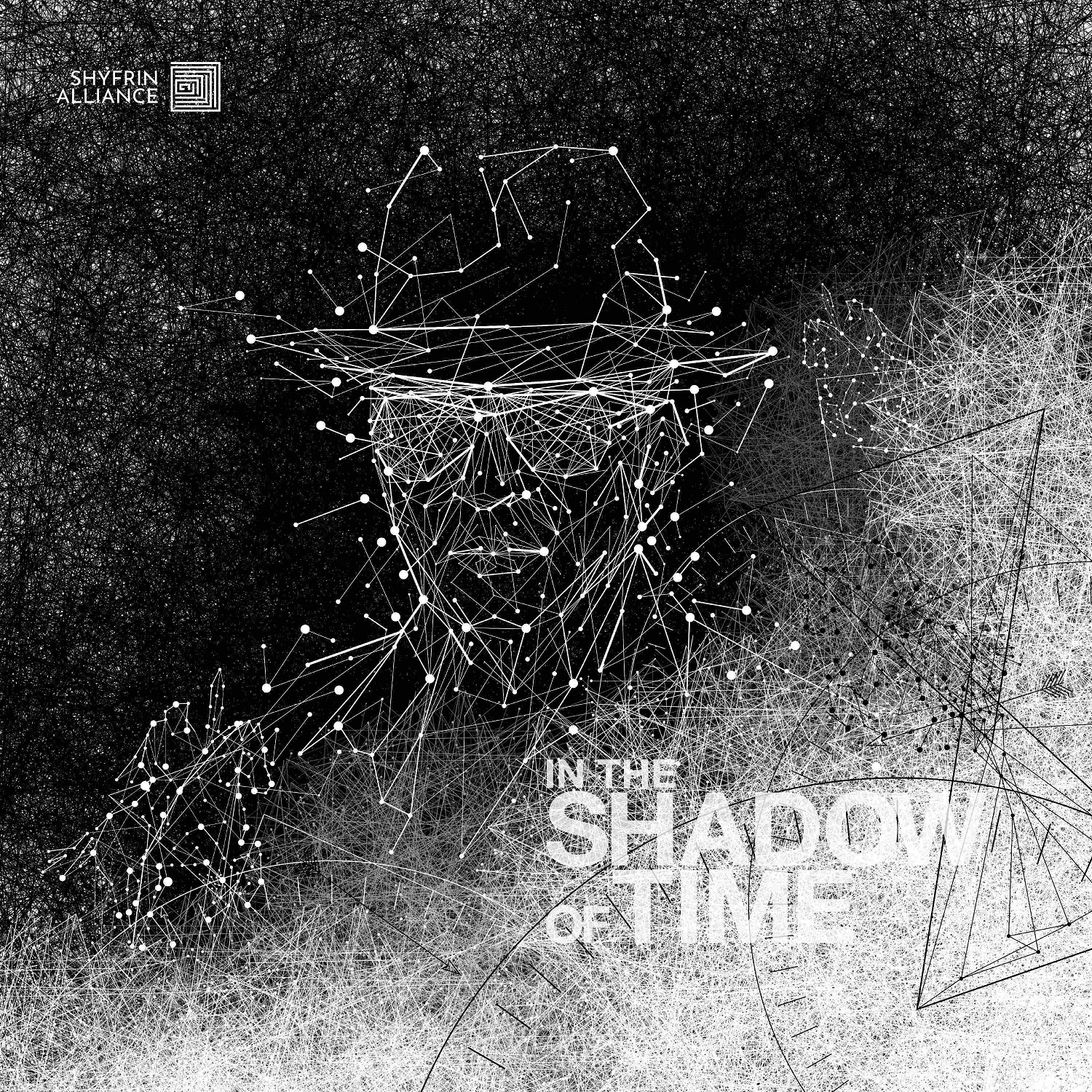
Shyfrin Alliance is back, and if their acclaimed debut, Upside Down Blues (which racked up over half a million streams), was a strong introduction, then their much-anticipated sophomore effort, “In the Shadow of Time,” is the philosophical manifesto we didn’t know we needed. Released in November 2025, the project—the brainchild of award-winning author, businessman, and scientist Eduard Shyfrin—is a formidable, seven-track blues-rock odyssey that tackles the toughest concept of all: the enigma of Time itself.
Eduard Shyfrin approaches music with the intellectual heft of a seasoned academic and the gut-punch emotion of a blues veteran. “I don’t think there exists an album dedicated purely to the topic of time,” he states, and that fearless commitment to breaking ground is evident from the first note. Across 32 minutes, Shyfrin uses his authoritative bass-baritone to guide us through a masterclass of moody blues, rock grit, and existential inquiry. The album has:
| # | Track Title | Duration |
| 1. | Colours of Time | 6:41 |
| 2. | In the Shadow of Time | 3:42 |
| 3. | Black Hole Blues | 5:20 |
| 4. | Point a Point B | 4:29 |
| 5. | Pendulum | 4:31 |
| 6. | Buddha Blues | 3:24 |
| 7. | Insanity Blues | 4:31 |
The album’s centerpiece, the title track “In the Shadow of Time,” is a dramatic soundscape that personifies time as an ominous, almost shapeless entity. It’s a track that demands you lean in, with rolling drums and a threatening low-end setting a cinematic, noir-blues atmosphere. Shyfrin’s lyrics, rich with metaphor, grapple with this unseen force: “He is shapeless / No circle no triangle no square / He is faceless / With low charming voice… I want to know who is there? / In the shadow of Time?” He likens its mysterious forms to an abstract expressionist painting by Jackson Pollock—unrecognizable, chaotic, yet undeniably pressing on human will. This is blues for the metaphysical age; a challenge to the clock itself.
The metaphysical ride continues with the track “Pendulum,” a brilliant exploration of time’s duality. It paints a picture of a relentless, swinging force, “Viceroy of the being,” governing every facet of existence: “Time for Heaven, Time for Earth / Time to build, Time to break.” Yet, in a powerful lyrical pivot that defines the album’s search for meaning, Shyfrin finds a brief, beautiful sanctuary: “In the realm of love / Pendulum / Is at standstill / In realm of love / There is no pain no crime / And Black Rider / Has no license to kill.” This pause—this moment of love halting the eternal swing—is nothing less than anthemic.
The mood shifts with “Whiskey Blues,” a smoky, soul-heavy confession anchored in life’s necessary surrenders. The track weaves through the daily grind of despair and numbness, only to find a brief, breaking-the-wall clarity in the evening: “In the morning / It’s a difficult day / In the midday / Sky is gloomy and grey / In the evening / I go down the hole / Whiskey blues is playing / In my soul.” It’s the most raw, human track, allowing the listener to feel the weight before the next spiritual ascent.
That ascent arrives with the already standout “Buddha Blues,” which offers a contrasting, uplifting perspective: time as a healer. Built on an infectious blend of guitar, piano, and a gospel-blues chorus, the track is a simple, profound mantra. Shyfrin’s authoritative low register grounds the repeating, powerful lines: “I was living my life / I saw you standing by / I fell in love with you / But I said goodbye / And as the time goes by / I’m still living my life.” It’s a song about acceptance, about finding peace in the passage of time—a Buddhist approach wrapped in a stellar blues-rock package.

Follow SHYFRIN ALLIANCE via:
With “In the Shadow of Time,” Shyfrin Alliance has cemented its place as a rare commodity in modern music. This is not generic blues-rock; it’s a profound fusion of the soulful grit of the blues with the deep intellectual pursuit of a thinker steeped in Kabbalah and scientific theory. The whole album feels meticulously crafted, recorded with an analog warmth that serves the philosophical depth. It’s an album that demands to be listened to, questioned, and felt, proving that the most compelling rock music is often found where the heart meets the mind.